Digital Signage
Digital Signage Content for Glasgow Businesses: What Works on Screen
Screens in windows, bars, gyms and waiting rooms only work if the content is designed for them. Practical guidance from six years of commercial screen design.
Published 17 October 20266 min read
Why most screen content does not work
Plenty of businesses install a screen and then fill it with whatever is to hand: a resized poster, a wall of text, a slideshow of photos. The screen is on, but nobody reads it. Screen content is its own discipline. People glance at it for a few seconds, often from across a room, while doing something else. I have designed commercial screen content since 2020, including menus, promotions, campaign bursts and multi-screen rollouts, and the same rules apply whether it is one screen in a café or a network across many sites.
Design for distance and dwell time
Start with where people will be standing and how long they will look. A window screen on a busy Glasgow street gets a two-second glance from someone walking past; a screen in a waiting room or a queue gets much longer. Text sizes, the amount of information and the length of each slide should follow from that. As a rule: one message per screen, large type, strong contrast, and nothing that relies on reading small print.
Menu boards
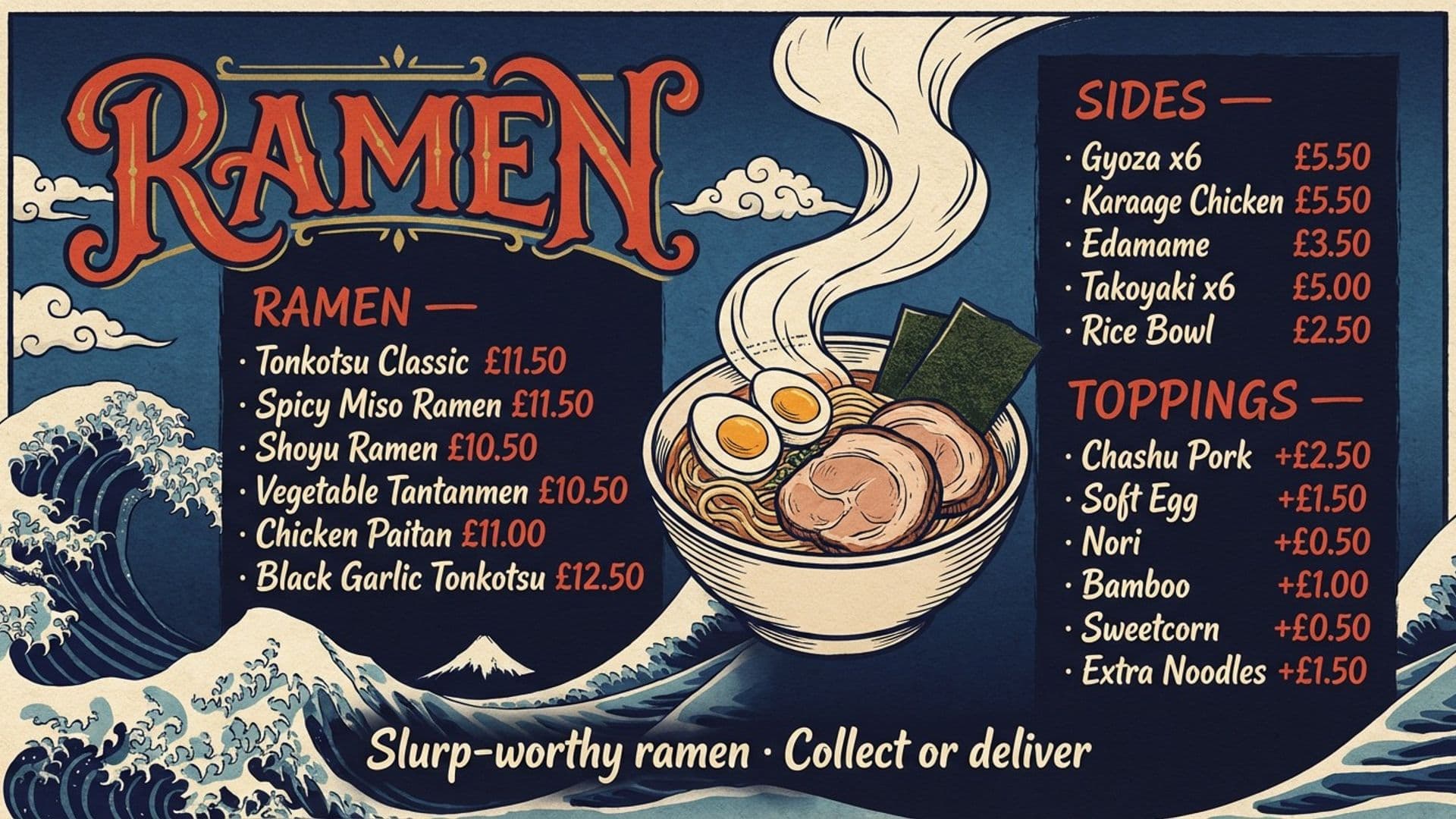
Digital menu boards for cafés, restaurants and takeaways need a clear hierarchy: categories first, then items, then prices, with your best sellers or highest-margin items given the most space. Prices should be easy to scan, and the layout should survive daily or seasonal changes without being redesigned each time. Good menu board design is as much a system as a single layout.
Keep a schedule, not a slideshow
The strength of a screen is that it can change. Breakfast, lunch and evening offers; weekday and weekend promotions; event nights; seasonal campaigns. Planning content as a schedule rather than one long loop keeps it relevant and stops regulars from tuning it out.
What it costs
A static digital signage screen design starts from £150 and an animated signage advert from £350. For businesses that change screen content regularly, signage work can be included in a monthly support plan so updates happen without a new quote each time.
Where AI fits
Screens need a lot of content, which makes them a good fit for AI-assisted production when it is properly controlled. I built VIZN AI, a system that turns a brand guideline and a menu into on-brand screen designs, checks every render against the brand rules and schedules the results to screens. Used this way, AI produces volume without the brand drifting; used carelessly, it produces screens that look generic.
Frequently asked questions
- How much does digital signage design cost?
- From a senior freelance designer in Glasgow, a static screen design starts from around £150 and an animated signage advert from £350. Regular updates can be covered by a monthly support plan.
- Do you supply the screens?
- No. I design the content. Your screen or signage supplier handles the hardware and software, and I supply files in the formats and sizes your system needs.
- What size should digital signage text be?
- It depends on viewing distance, but screen text needs to be far larger than print. Keep to one message per screen and test it from where your customers will actually stand.
Written by Ross Boag
Need help with design, websites or branding?
Ross Boag is a senior freelance graphic designer in Glasgow with 12+ years of agency and in-house experience, for brands including Hilton, Volvo and Jim Beam. He also designs logos and brand identities and websites, and prints the work through his online print shop, for businesses across Glasgow, Scotland and the UK.